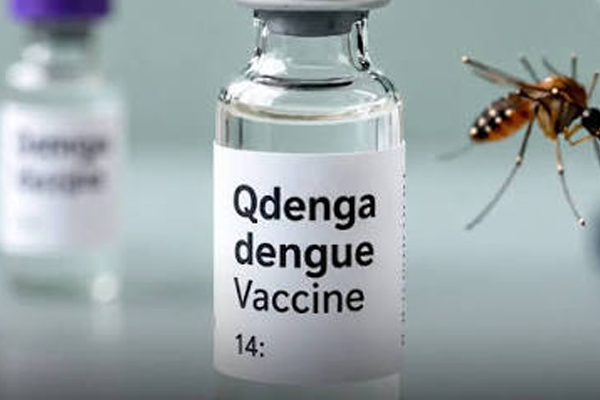

India Approves First Dengue Vaccine QDENGA for People Aged 4 to 60 Years
India has taken a big leap in approving for use a vaccine against mosquito-borne dengue disease that kills thousands every year. The disease has seen an 11-time increase in the last 20 years. India accounts for one-third of global dengue infections. India’s Drug Controller General of India (DCGI) has granted market authorisation to Takeda Biopharmaceuticals India’s QDENGA (TAK-003). Takeda said this is the first dengue vaccine to be approved in the country. Takeda’s two-dose QDENGA vaccine can be administered without prior dengue screening and protects against all four dengue virus serotypes. DGCI says this will help prevent dengue disease in individuals aged 4 to 60 years. QDENGA is a live-attenuated tetravalent and administered as a two-dose regimen, three months apart. Takeda’s global clinical development programme conducted 19 Phase I, II and III clinical trials involving more than 28,000 participants in dengue-endemic and non-endemic regions. The company’s pivotal Phase III TIDES (DEN-301) trial enrolled more than 20,000 participants across eight dengue-endemic countries. Takeda claims the vaccine demonstrated an efficacy of 80.2% against virologically confirmed dengue 12 months after the second dose and 90.4% efficacy against dengue-related hospitalisation at 18 months. At 4.5 years, the individual having taken the doses showed 84.1% efficacy against dengue-related hospitalisation, while a seven-year follow-up demonstrated sustained protection against dengue disease and dengue-related hospitalisation across all four serotypes. Takeda said QDENGA has been approved in 43 countries across Asia, Latin America and Europe, with more than 32 million doses distributed through public and private immunisation programmes. The vaccine is recommended by the World Health Organization for use in dengue-endemic settings with high transmission and has also received WHO prequalification. It is currently included in Brazil’s National Immunisation Programme and is available through public programmes in Argentina, Colombia and Indonesia.