

India business travel up in Tier 2 & 3 Cities
India’s corporate travel market in India’s Tier 2 & 3 cities is benefitting from growing investment and business deals. Travel and hospitality industry has launched strategic initiatives. Mumbai, Delhi NCR, and Bangalore are major business travel destinations. But, cities emerging as corporate centers include Ahmedabad, Vadodara, Bhubaneswar, and Lucknow, among others. Travel to 2 and 3 cities is growing fast, as much as 25-67% year-on-year. Against this, there’s only 2-3% growth in metropolitan centers. A major boast is provided by the manufacturing sector with a contribution of around 17% to the latest GDP. Tier 2 cities have emerged as strong hubs for business travel. Investment in Automotive & Auto Components sector is now nearly US $ 10 billion, with an employee force of 750,000. Vijayawada (Andhra Pradesh) hosts Isuzu Motors India, Hero MotorCorp, Ashok Leyland, and AVERA Energy, with significant auto component suppliers concentrated in nearby Sri City and Satyavedu. Lucknow (Uttar Pradesh is home to Tata Motors commercial vehicle division, Honda Cars India, New Holland Agriculture, and Yamaha Motors. Coimbatore (Tamil Nadu) operates as the Manchester of South India” housing TAFE Tractors, automotive component manufacturers, and engineering firms. Surat (Gujarat), while better known for textiles and gems, is emerging as an automotive and auto-component hub. These manufacturing hubs are growing corporate travel for executive rotations, supplier audits, quality control visits and senior management. For Steel & Heavy Manufacturing sector the following areas are highlighted. FMCG & Retail is growing in tier 2 cities growing wide distribution networks, trade meetings, and supply chain coordination. Indore (MP) is the main market place for Central India, where the regional offices of ITC, Hindustan Unilever, and many other FMCG brands are situated. Surat is the place for gems and jewellery trading, textiles and chemical manufacturing, all of which need business meetings, supply chain management and trade activity coordination. The consumption of FMCG in tier 2 and tier 3 cities accounts for 36% of the total in India and it is predicted to reach 45% by 2025. Pharmaceutical & Healthcare Coimbatore: The rapid growth of tech parks and startup ecosystems has turned into a secondary IT hub which in turn has created a demand for travel related to client meeting, project execution and training programs. Indore exemplifies the infrastructure boom in Tier 2 cities. Four major hospitality conglomerates are investing more than US $ 50 million to expand hotel inventory from 8,500 room to approximately 10,000 rooms by 2026. This expansion targets the growing MICE (Meetings, incentives, Conferences, and Exhibitions) demand and corporate traveler needs. Travel agencies like Yatra, Make My Trip and Thomas Cook are strategising and plugging new strategies in Tier 2 and 3 cities of India.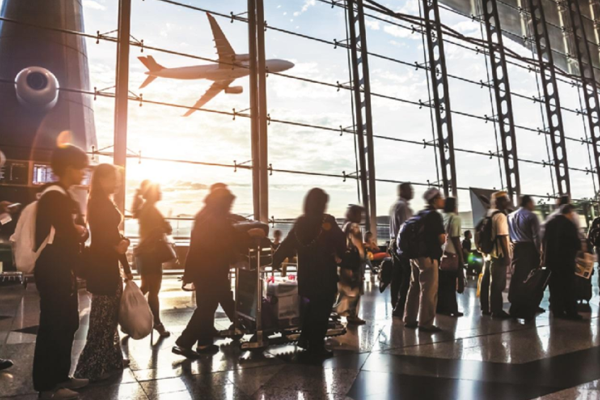
Among industry types that have most impacted travel are IT services, BFSI, engineering, aviation, oil and gas, pharma, FMCG, and automobiles.
Odisha stands as perhaps the single most significant investment destination for corporate travel in Tier 2 India. Tata Steel’s Kalingangar expansion alone represents US $ 3 billion in investing, expanding capacity with nearly 34,000+ new jobs.The acquisition of Neelachal Ispat Nigam Ltd (NINL) by Tata Steel for us $ 1.4 billion consolidates industrial activities in the region.
are shifting their operational bases away from the major metro cities to places like Coimbatore, Visakhapatnam, and Chandigarh, thus increasing the requirement for travel for R&D coordination, manufacturing operations and regulatory purposes. Visakhapatnam is luring pharmaceutical companies with promises of lower operating costs and a good location. This upsizing has resulted in travel for project management, supply chain coordination, and corporate meetings.
IT &Information Technology Services new hubs are coming up in Coimbatore, Bhubaneswar, Kochi, Chandigarh, and Guwahati are making a considerable impact on corporate travel demand.
Bhubaneswar is becoming recognized as an IT service center with developing Global Capability Centers (GCCs), which has led to a projected growth in GCC demographics of 30-40% demand in Tier 2 cities.
The Hotel & Infrastructure Boom is because without
a sufficient hospitality infrastructure, corporate travel cannot prosper. Hotels and the hospitality sector’s investors are well aware of this and thereby taking the opportunity to upgrade their locations in Tier 2 cities.
Madhya Pradesh is the sole recipient of nearly US $ 500 million investment in tourism and hospitality which is going to be spread over the cities of Indore, Bhopal, Gwalior, and Jabalpur and will be mainly on luxury hotels, conference centers, and business-ready properties.
Jaipur, Kochi, Lucknow, Mysuru, Coimbatore, and Bhubaneswar are among the cities where the hospitality sector is expanding rapidly due to better connectivity (especially the UDAN scheme enhancing regional air access), lower land acquisition costs compared to metros, and increasing demand for both corporate and leisure travel.