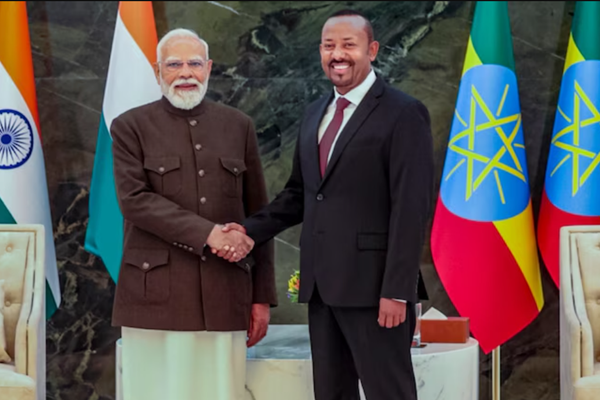

Modi's visit to Ethiopia evolved 2000-year India-Ethiopia bond into Strategic Partnership
Indian Prime Minister Narendra Modi’s visit to Ethiopia has transformed the 2000-year-old relationship between the two ancient civilizations into a wide-ranging strategic partnership. The dawn of a new era in bilateral ties was more than evident. Ethiopian Prime Minister Dr. Abiy Ahmed Ali received the Indian Prime Minister at the airport, conferred the highest national honor, ‘Nishan of Ethiopia,’ on Modi, and then drove Modi back to the airport to bid farewell. Of late, Modi’s growing trademark informal car rides with global leaders signify a unique diplomatic tactic and way of expanding the connection from official to personal. The visit on 16th and 17th December 2025 marked a ‘Strategic Partnership’ encompassing a set of new forward-moving agreements. They emphasize people-centric development as the organizing principle of future cooperation. A highlight of the visit was a rendition by Ethiopian singers of one of India’s most revered independence songs, ‘Vande Mataram.’ India and Ethiopia agreed to expand development cooperation, strengthen trade and investment ties, and heighten engagement on regional and global platforms. The Ethiopia visit is a demonstration of India’s wider Africa outreach. Modi and Dr. Abiy have had substantive discussions on the sidelines of the BRICS and G20 summits. These led to 3 bilateral Memorandums of Understanding signed during this visit. These cover UN Peacekeeping Operations Training, Mutual Administrative Assistance in Customs Matters, and the establishment of a Data Center at Ethiopia’s Ministry of Foreign Affairs. Also, India will offer more scholarships through the Indian Council for Cultural Relations, introduce AI short courses for Ethiopian learners, and strengthen cooperation in maternal and neonatal healthcare. Defense cooperation has grown with a defense MoU signed in 2025 and the first Joint Defense Cooperation meeting held in New Delhi. In 2023-24, bilateral trade touched $571.52 million. Indian exports amounted to $489.59 million, consisting mainly of primary and semi-finished iron and steel products, pharmaceuticals, machinery, instruments, and metal manufactures. Ethiopia’s exports totalled $81.93 million and include pulses, vegetables and seeds, leather, spices, and precious or semi-precious stones. Investment by 650 Indian companies exceeds $5 billion in Ethiopia, $3 billion of which is already realized. Sectors include agriculture, floriculture, cotton and textiles, manufacturing, engineering, plastics, water management, and consultancy services. Ethiopia is among the largest recipients of India’s long-term concessional credit in Africa, with more than $1 billion sanctioned for projects in rural electrification, sugar industry development, and railways.